Freedom of speech is not a luxury. It is not a fringe ideal. It is the foundation on which every healthy democracy stands.
Without the ability to speak freely, to question authority, to challenge bad ideas, and to expose wrongdoing, no society can truly call itself free. History shows this again and again: where speech is protected, societies advance; where it is suppressed, corruption, fear, and abuse of power follow.
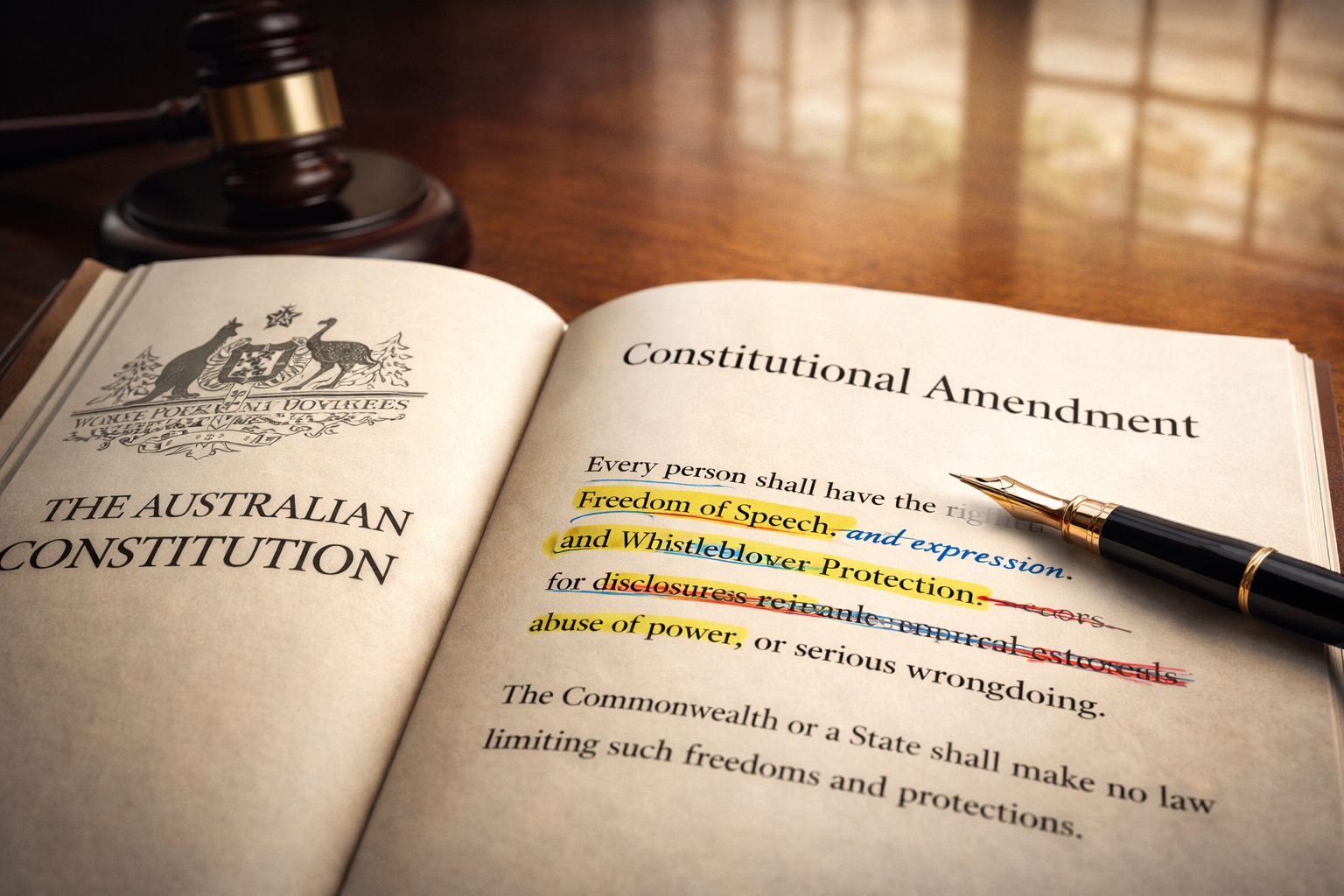
Australia prides itself on being a democratic nation, yet one uncomfortable truth remains — our Constitution contains no explicit protection for freedom of speech. That omission matters more than most people realise.
What Is Freedom of Speech?
Freedom of speech is the right to express ideas, opinions, information, and criticism without fear of punishment by the government.
It includes:
- Political criticism
- Public debate
- Journalism and whistleblowing
- Peaceful protest
- Artistic and social expression
- Unpopular or uncomfortable opinions
True freedom of speech does not mean freedom from consequences imposed by society, but it does mean freedom from government censorship, punishment, or intimidation simply for speaking.
A Brief History: Where Free Speech Has Shaped the World
Ancient Foundations
The idea of free speech stretches back thousands of years. In ancient Athens, parrhesia described the right of citizens to speak openly in public assemblies. While imperfect and limited, the concept recognised that open debate was essential to self-government.
The Enlightenment
In the 17th and 18th centuries, thinkers like John Milton, Voltaire, and John Stuart Mill argued that truth emerges through open discussion, not enforced silence. Mill famously warned that suppressing speech robs society of the chance to correct its own errors.
These ideas directly influenced modern democracies.
The United States
After overthrowing British rule, the United States enshrined freedom of speech in its Constitution through the First Amendment. This explicit protection prevented future governments from silencing dissent even speech that was unpopular, offensive, or politically inconvenient.
Over time, this safeguard allowed:
- Investigative journalism
- Civil rights movements
- Anti-war protests
- Exposure of government misconduct
None of these advances would have been possible without strong speech protections.
Other Democracies
Countries such as Canada, New Zealand, and members of the European Union all include explicit protections for expression in constitutional or human rights law. While each balances this freedom differently, the principle remains the same: speech must be protected from arbitrary government restriction.
What Happens When Speech Is Not Protected?
History also shows the opposite.
- Authoritarian regimes suppress speech first, then expand control
- Corruption thrives where whistleblowers are silenced
- Laws are abused when criticism becomes risky
- Fear replaces accountability
Once speech is restricted “for safety” or “for order,” it is rarely restored without struggle.
The lesson is blunt: rights that are not written down are easy to remove.
Australia’s Gap: An Uncomfortable Reality
Australia has no constitutional right to free speech.
Instead, we rely on:
- An implied freedom of political communication
- Ordinary legislation
- The goodwill of governments
The implied freedom is not a personal right, does not protect general expression, and can be overridden by legislation as long as Parliament claims a legitimate purpose.
This leaves Australians exposed to:
- Expanding secrecy laws
- Speech restrictions passed with little scrutiny
- Criminal penalties for expression that would be protected elsewhere
A democracy should not depend on implied rights or political restraint. It should depend on clear constitutional guarantees.
Why Freedom of Speech Is Still Essential Today
In a modern society, free speech protects more than opinions — it protects accountability.
It allows:
- Journalists to investigate power
- Citizens to criticise policy
- Minorities to be heard
- Bad ideas to be challenged openly instead of driven underground
Importantly, free speech is self-correcting. False ideas fail when exposed to debate. Suppression, by contrast, gives them power and mystique.
Protecting Speech Does Not Mean Accepting Harm
Freedom of speech is not absolute. Even the strongest protections allow limits for:
- Genuine threats
- Incitement to violence
- Defamation
- Serious harassment
But these limits must be narrow, proportionate, and justified, not vague or politically convenient. A constitutional protection ensures governments must prove necessity — not simply assert it.
Why Constitutional Protection Matters
If free speech is not protected at the highest legal level, it can be eroded quietly, incrementally, and legally.
A constitutional safeguard would:
- Prevent overreach by future governments
- Give courts a clear standard to apply
- Protect speech beyond election cycles
- Strengthen democratic culture
Most importantly, it would put the decision in the hands of the people, not politicians.
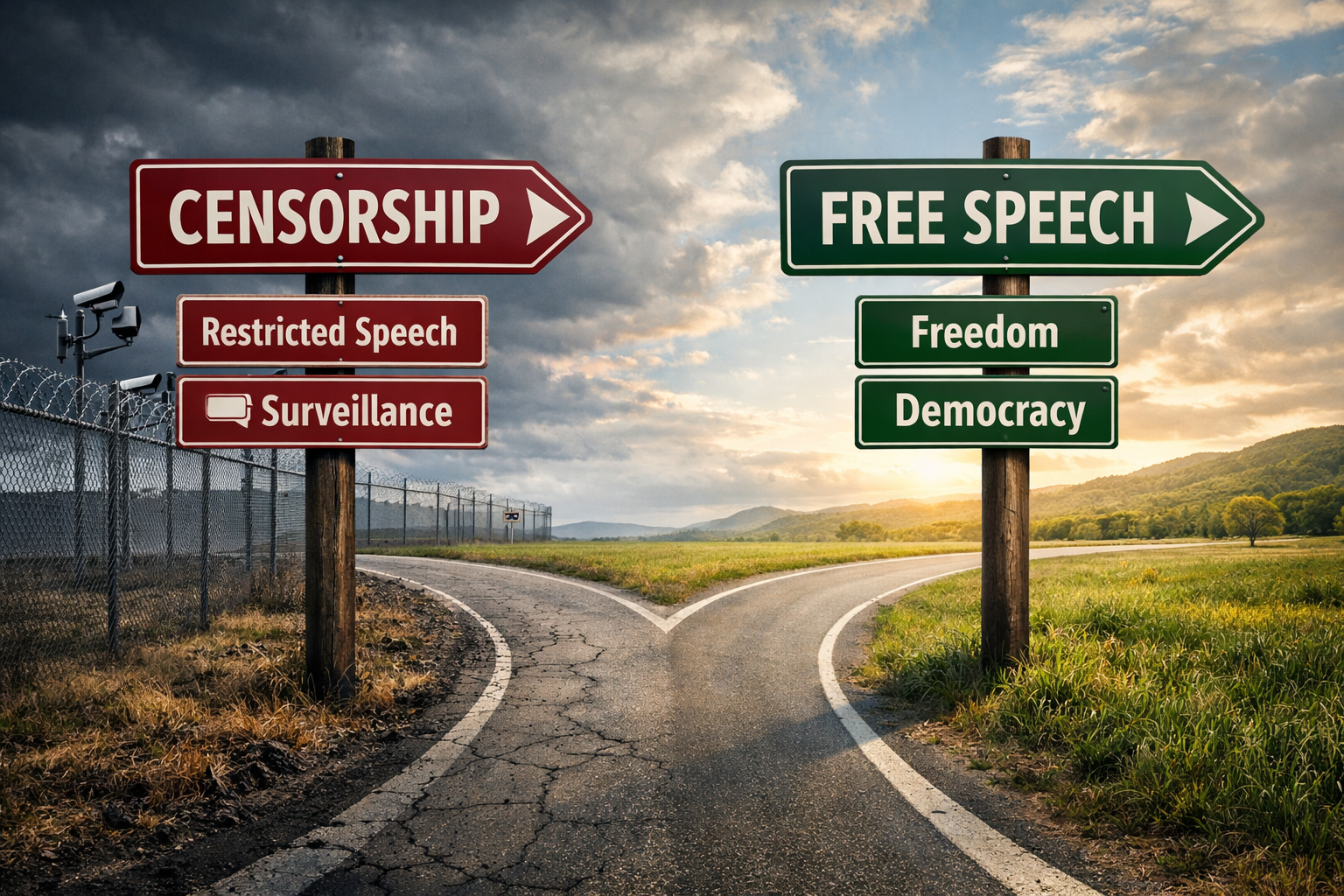
The Choice Ahead
Australia has matured as a nation. Our Constitution has evolved before, and it can evolve again.
The question is simple:
Do we trust free citizens with open debate — or do we allow speech to remain a privilege granted by legislation?
Freedom of speech is not about agreeing with one another.
It is about protecting the right to disagree.
And that right is worth defending.