Q: Don’t Australians already have free speech?
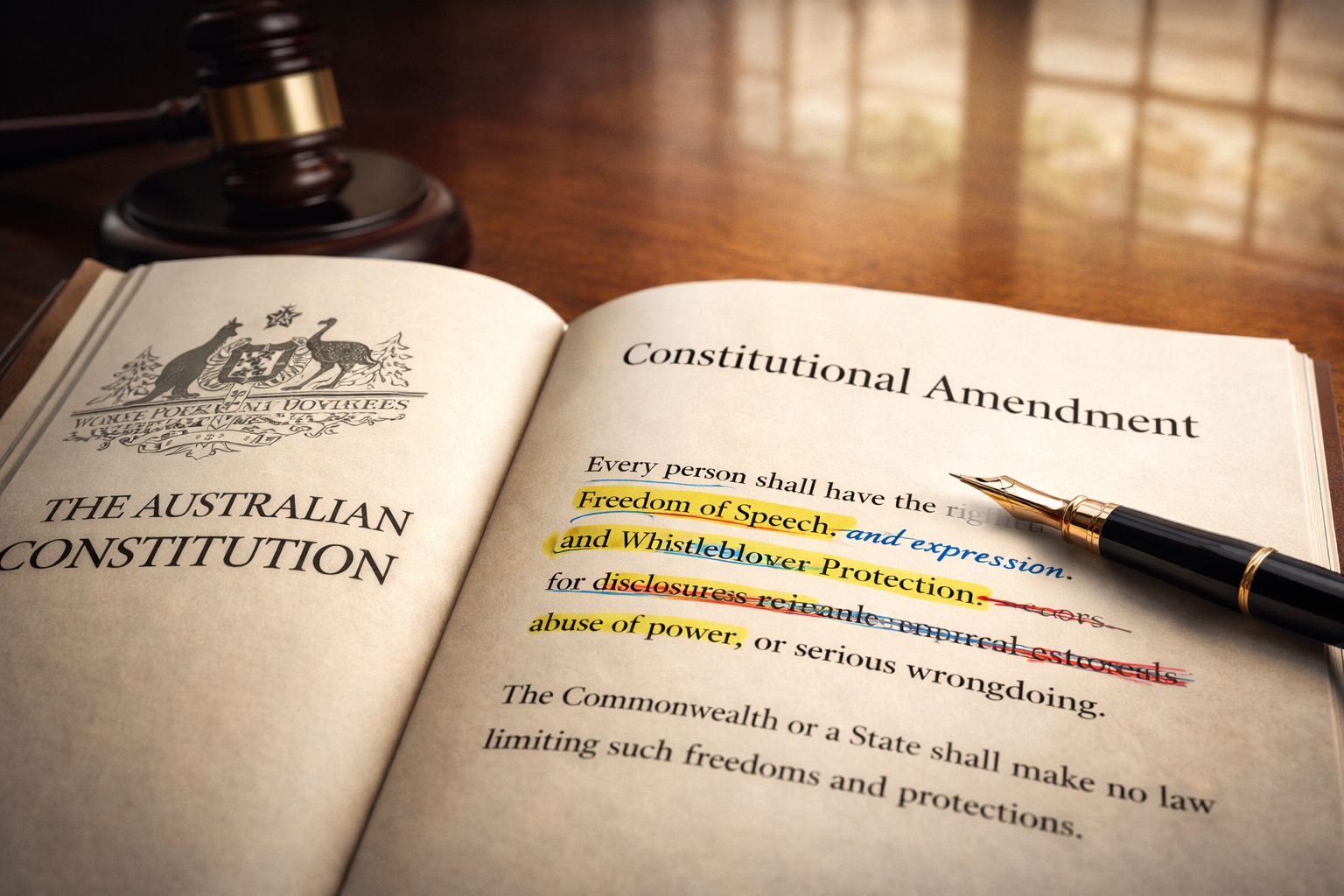
Not constitutionally. Australia relies on an implied freedom that:
- only applies to political communication
- is not a personal right
- can be overridden by legislation
If it’s not written down, it’s not guaranteed.
Q: Won’t this protect hate speech?
No. The amendment explicitly excludes speech that incites violence, harm, or suffering.
It protects debate and dissent, not abuse or threats.
Q: Won’t this undermine social harmony?
Open debate strengthens social cohesion by allowing grievances to be aired peacefully rather than suppressed.
History shows suppression breeds resentment — not harmony.
Q: Won’t this stop the government from keeping people safe?
No. Governments retain the power to restrict speech where it is:
- necessary
- proportionate
- genuinely linked to safety
This amendment stops excessive restrictions, not legitimate ones.
Q: Why include whistleblower protections in the Constitution?
Because legislative protections have failed.
Whistleblowers have faced prosecution, retaliation, and career destruction despite acting in the public interest. Constitutional protection ensures accountability cannot be quietly removed.
Q: Shouldn’t Parliament decide these matters, not courts?
Parliament still makes laws, but courts ensure those laws respect fundamental rights.
That is how constitutional democracy works.
Q: Isn’t this copying the United States?
No. It draws from global democratic principles while being tailored to Australia, including explicit exclusions for violent speech.
Q: Why do we need a referendum?
Because only a constitutional amendment:
- survives political cycles
- applies to all governments
- provides long-term certainty
This is a decision that belongs to the people.