A Bill for:
An Act to alter the Constitution to enshrine freedom of speech, freedom of expression, and whistleblower protections, and for related purposes.
1. Short Title
This Act may be cited as the Constitution Alteration (Freedom of Speech and Whistleblower Protection) Act.
2. Purpose
The purpose of this Act is to:
- Guarantee freedom of speech and freedom of expression as fundamental constitutional rights;
- Protect individuals who disclose wrongdoing in the public interest from retaliation or punishment; and
- Ensure that speech which incites violence, serious harm, or suffering is not protected.
3. Alteration of the Constitution
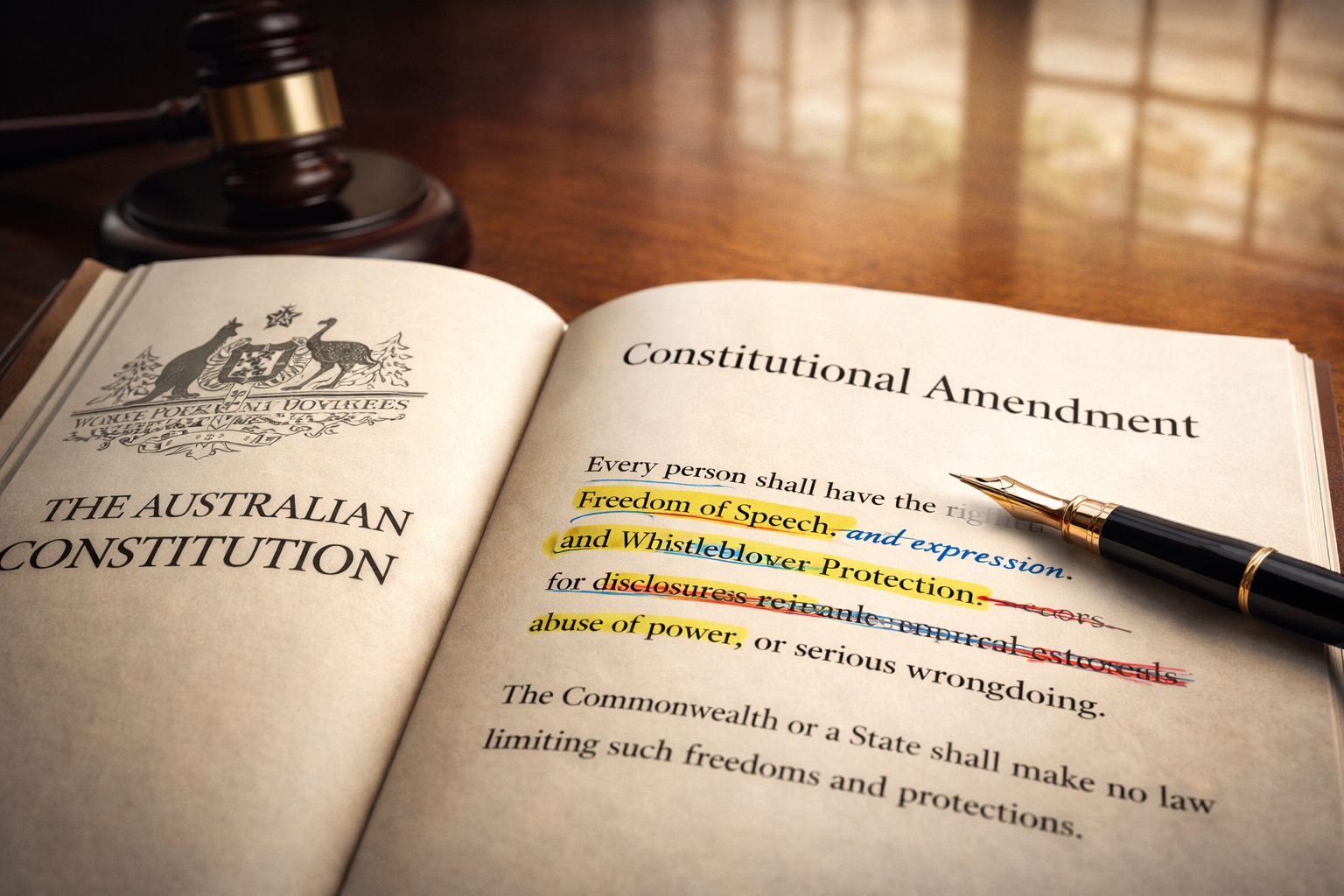
The Constitution is altered by inserting the following section after Chapter III:
Section 80C — Freedom of Speech, Expression, and Whistleblower Protection
(1) Freedom of Speech and Expression
Every person has the right to freedom of speech, freedom of expression, and freedom of communication, including the freedom to seek, receive, publish, and impart information and ideas by any lawful means.
(2) Limitation on Government Power
The Commonwealth, a State, or a Territory shall not make or enforce any law that abridges the freedoms protected under subsection (1), except where such limitation is:
(a) prescribed by law; and
(b) necessary, reasonable, and proportionate in a free and democratic society.
(3) Excluded Speech
The freedoms protected by this section do not extend to speech that:
(a) directly incites or advocates violence, serious physical harm, or the infliction of pain or suffering against any person or group;
(b) constitutes a true threat of violence;
(c) incites imminent unlawful conduct; or
(d) is otherwise criminal under laws that are consistent with this section.
(4) Protection of Whistleblowers
A person shall not be subject to civil, criminal, administrative, or employment-related penalty for making a disclosure of information where:
(a) the disclosure reveals corruption, illegality, abuse of power, gross mismanagement, or serious risk to public safety; and
(b) the disclosure is made in good faith and in the public interest.
(5) Prohibition on Retaliation
No law, authority, or official of the Commonwealth, a State, or a Territory may retaliate against, punish, or disadvantage a person for a disclosure protected under subsection (4).
(6) Burden of Proof
Where a person alleges retaliation for protected speech or disclosure, the burden lies on the authority or employer to demonstrate that any adverse action was lawful and unrelated to the protected conduct.
(7) Enforcement
The rights conferred by this section are personal rights enforceable by the courts.
(8) Application
This section binds:
- the Commonwealth
- the States
- the Territories
- all public authorities and officials
4. Inconsistency
Any law inconsistent with this section is invalid to the extent of the inconsistency.
5. Referendum Question
“Do you approve this proposed law to alter the Constitution to protect freedom of speech, freedom of expression, and whistleblowers, while excluding speech that incites violence or serious harm?”